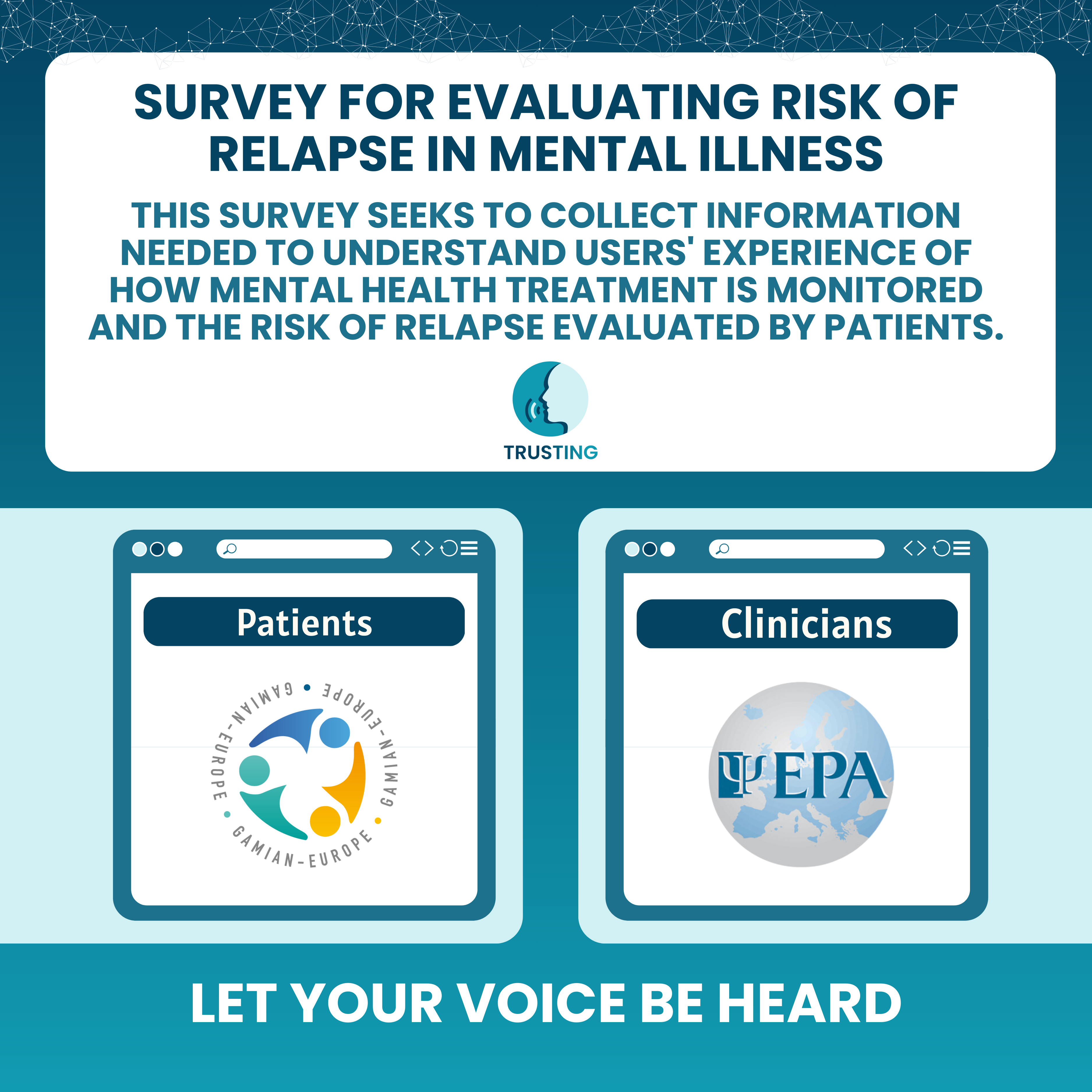
Two new European surveys have been launched as part of the TRUSTING Project, an EU-funded research initiative aiming to improve early detection and prevention of psychotic relapse using innovative digital tools and artificial intelligence.
The surveys invite both service users and clinicians to share their experiences and professional practices in assessing relapse risk. Insights gathered will support the development of remote monitoring tools designed to improve mental health care and help people at risk of relapse live more independently.
About the TRUSTING Project
Psychotic disorders often follow a fluctuating course, with individuals experiencing periods of recovery followed by relapse. Risk increases particularly when antipsychotic medication is reduced or discontinued. However, early detection of warning signs allows patients and clinicians to intervene in time through medication adjustments, psychological support, or social interventions.
The TRUSTING Project is based on the hypothesis that changes in spontaneous speech can signal early warning signs of psychosis, including hallucinations, delusions, or thought disorder.
Participants record short speech samples through a secure remote platform. Artificial intelligence is then used to analyse these recordings and detect subtle changes that may predict relapse.
The goal is to develop a user-friendly and trustworthy application that people can use from home, enabling early alerts and supporting independent living with or without long-term medication.
Supporting Service Users’ Experiences
The Service User Assessment Survey gathers experiences from individuals who have received mental health treatment. Participants are asked how relapse risk is monitored and assessed during care.
Researchers aim to understand how patients experience monitoring and how digital tools could support ongoing care. The survey takes approximately five to ten minutes and responses remain anonymous.
Clinicians Asked to Share Professional Practices
A second survey targets mental health professionals working with individuals at risk of psychotic relapse. It explores how relapse risk is identified and managed in clinical settings.
Clinicians are asked about assessment routines and team practices. The survey takes around fifteen minutes, and no patient-specific information is collected.
Improving Future Mental Health Monitoring
Both surveys contribute to research aimed at strengthening relapse prevention and improving remote monitoring solutions. By gathering insights from both patients and professionals, researchers hope to develop tools that complement existing care while supporting early intervention.
Participation in both surveys is voluntary, and responses are processed anonymously. The information gathered will help shape future mental health monitoring tools across Europe.
Why Participation Matters
Relapse in mental illness can significantly affect recovery, well-being, and healthcare systems. Improved monitoring and early detection may help reduce hospital admissions and support people in maintaining stability in their mental health.
Researchers encourage eligible participants to take part and help shape future mental health care solutions.
Take Part in the Surveys
Eligible participants can access the surveys here:
- Service User Survey (GAMIAN-Europe):
https://redcap.link/trustingsurvey_users - Clinician Survey (European Psychiatric Association – EPA):
https://redcap.link/trustingsurvey_clinicians
Both surveys are anonymous and voluntary, and participation directly contributes to improving future monitoring and prevention of psychotic relapse across Europe.
For more updates, insights, and news about TRUSTING’s progress, visit the TRUSTING Project website or follow us on social media:
Sign up for the yearly newsletter: shorturl.at/SvxFN
Funded by the European Union. Views and opinions expressed are, however, those of the author(s) only and do not necessarily reflect those of the European Union or of the European Health and Digital Executive Agency (HaDEA). Neither the European Union nor the granting authority can be held responsible for them.